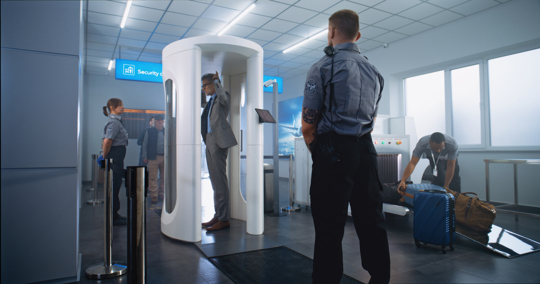
Airports are designed to feel routine, predictable systems built to move millions of people efficiently and safely. But recently, that sense of routine has started to shift. For many travelers, particularly immigrants and international visitors, the airport is no longer just a place of transit. It is becoming a place of uncertainty.
A combination of government funding disruptions, increased visibility of immigration enforcement, and overlapping federal agency roles has changed how people experience air travel. The result is not just operational disruption. It is growing fear.
The Changing Presence of Enforcement at Airports
During a recent Department of Homeland Security funding lapse, Transportation Security Administration officers were required to continue working without pay, leading to staffing shortages. To help maintain operations, Immigration and Customs Enforcement personnel were deployed to assist at certain airports.
While their roles have generally been limited to support functions like monitoring and coordination, their presence has had a broader impact. ICE is not traditionally associated with airport screening. It is associated with immigration enforcement. That distinction matters, not just operationally, but psychologically.
Immigration Enforcement at Airports Is Not New
At the same time, it is important to separate perception from structure. Federal immigration enforcement has long been embedded in air travel.
Customs and Border Protection officers are a constant presence at international airports. Every traveler arriving from abroad is subject to inspection, questioning, and admission decisions. This includes passport control, visa verification, and customs screening. These processes are standard and have always been part of entering the United States. In that sense, immigration enforcement at airports is not a new development.
What Is New: Visibility and Uncertainty
What has changed is how visible and expansive that enforcement feels. The presence of additional agencies like ICE, combined with ongoing national debates around immigration, has blurred the lines for many travelers. People are no longer sure where routine screening ends and enforcement begins.
For some, this creates a critical question:
“Am I just traveling, or am I being evaluated?”
Even individuals who are lawfully present may feel heightened anxiety about interactions with federal officers. For mixed-status families, visa holders, or individuals with pending immigration matters, the stakes can feel especially high.
Fear Is Changing Traveler Behavior
Some travelers are expressing hesitation about flying altogether. Others are preparing differently, carrying additional documentation or avoiding certain routes or airports. For immigrant communities, even routine domestic travel can now feel uncertain.
Importantly, much of this fear is driven by perception rather than a formal change in policy. But perception still shapes behavior.
Know Your Rights at the Airport
While concerns are understandable, it is important for travelers to understand their rights and the limits of federal authority in airport settings.
- You have the right to remain silent. You are not required to answer questions about your immigration status to ICE or other law enforcement officers.
- You have the right to ask if you are being detained. If you are not under arrest or detention, you may ask if you are free to leave.
- You have the right to an attorney. If you are detained, you can request legal counsel, though immigration proceedings do not guarantee a government-appointed attorney.
- You have the right to refuse consent to search of your belongings, although TSA screenings and CBP inspections operate under different legal standards, especially at international entry points.
You should carry valid documentation if you are not a U.S. citizen. Immigration law requires certain non-citizens to have proof of status available.
It is also important to distinguish between agencies.
- TSA handles security screening.
- CBP handles entry into the United States at international arrivals.
- ICE focuses on immigration enforcement and investigations.
Understanding who you are interacting with can help reduce confusion and better inform how you respond.
The Broader Impact on Travel Experience
Operational disruptions, such as longer TSA lines and inconsistent wait times, have compounded this unease. Staffing shortages during the funding lapse created visible inefficiencies, reinforcing the sense that systems are strained.
But for many travelers, the larger issue is not delay. It is discomfort. Airports are no longer experienced as neutral spaces. Instead, they are increasingly seen as extensions of broader enforcement systems.
A Policy Issue With Human Consequences
This moment highlights how immigration policy debates do not stay confined to borders or courtrooms. They show up in everyday spaces, like airports, where millions of people interact with federal systems.
When multiple agencies operate in the same environment, without clear public understanding of their roles, confusion grows. And where there is confusion, there is often fear.
Final Thoughts
Air travel depends not only on security, but also on trust. Travelers need to understand the systems they are moving through and feel confident in how those systems operate.
Right now, that trust is being tested. When immigration enforcement becomes more visible in spaces like airports, whether through policy, staffing decisions, or perception, it changes how people experience travel. For some, it introduces hesitation. For others, it creates real fear.
Knowing your rights does not eliminate that fear, but it does give travelers a measure of control in an environment that can otherwise feel uncertain. And in today’s climate, that knowledge matters more than ever. If you have any questions, please feel free to contact The Modi Law Firm, PLLC